How we got here.
- 2019
Goldman Sachs
We built technology infrastructure for institutional finance and learned how consequential systems operate.
- 2021
Level III Capital
At 21 and 22, we left to start a quantitative fund. We raised $10M and began running systematic strategies.
- 2021 to 2025
Built for ourselves
We built the entire loop: data and observability, signal research, backtesting, optimization, risk, and automated execution. The strategies ran autonomously.
- 2025
Kimpton
We turned the system we had built for ourselves into Kimpton and applied it to the work investment teams actually do: agents read filings, transcripts, portfolios, and market data, then propose trades with the evidence attached. The team makes the decisions.
- 2026
Koliseum
Proposing trades exposed the real problem. Markets are a chaotic environment built on unstructured data, and no static benchmark could tell us whether a model's judgment would hold once conditions changed. At Y Combinator we built Koliseum to grade models against reality itself. We started in financial work, where we knew the cost of getting it wrong.
We learned to trust live results over historical fit. Kimpton brings that discipline to AI.
We also build Kimpton OS, where asset managers run AI agents across the firm and we evaluate every trade they propose.
Kimpton OS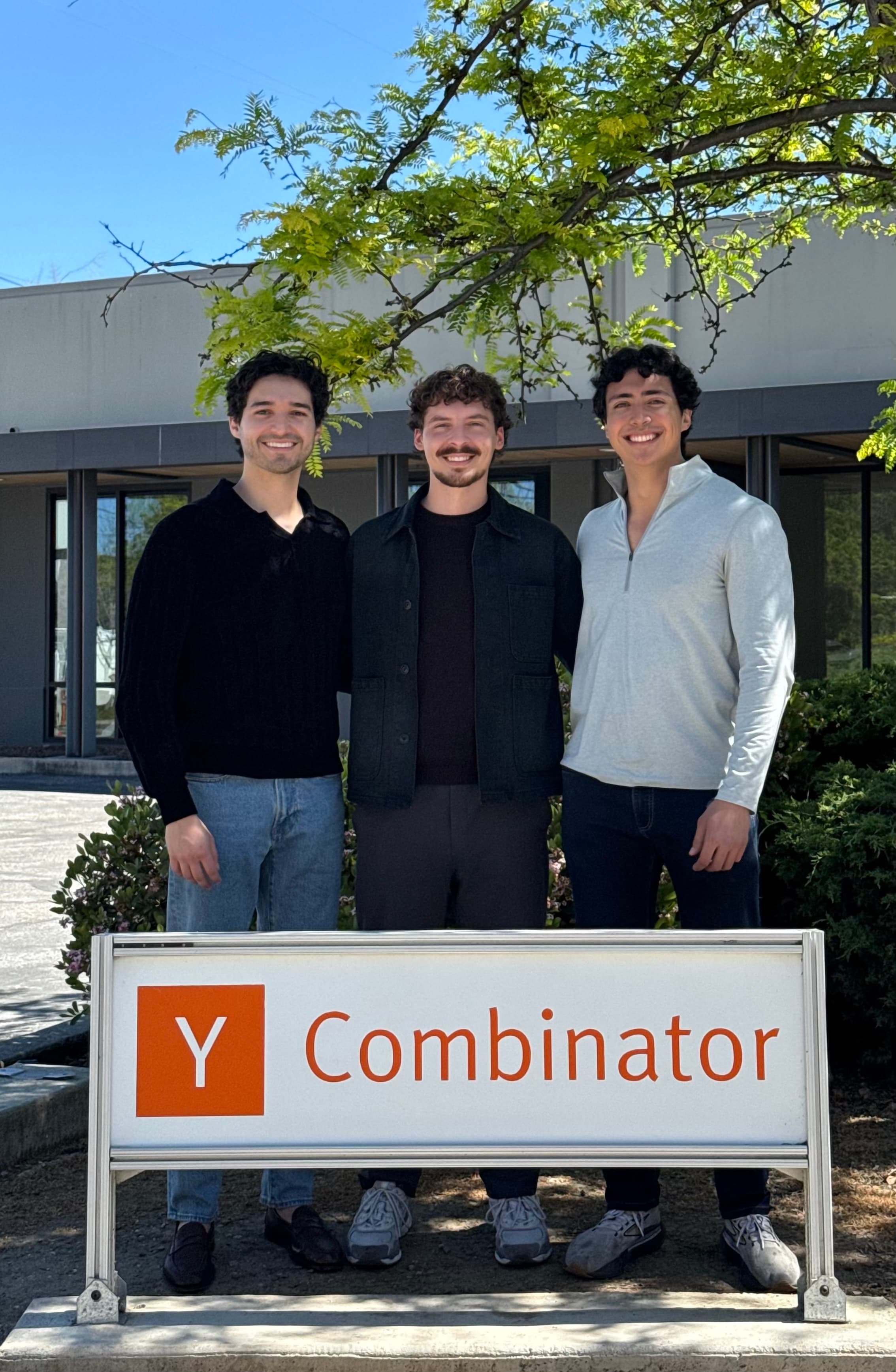
How the trading loop maps to AI systems.
We used backtests to develop strategies. We used live markets to find out whether they worked. A backtest can reward contamination or historical fit. A live test forces a model to act on data it has never seen.
Kimpton applies that discipline to AI systems: models, agents, predictions, actions, and the results they produce. Every run in an environment is recorded as a trajectory, so evaluation and training read from the same record.
Repeat from observe.
Observe
Capture market data, positions, orders, risk, and outcomes.
Capture inputs, tool calls, and the state of the environment.
Act in environment
Run the strategy live or in the simulator and let it place orders.
Run the model in the environment and let it decide and act.
Record trajectory
Keep the full record of orders, fills, and marks for every session.
Store observations, actions, rewards, and state transitions for every run.
Evaluate
Replay the record against point-in-time data and a disclosed baseline.
Verify the result, the resulting state, and the constraints against a disclosed baseline.
Train
Change signals, parameters, portfolio rules, or execution.
The trainer updates the model, prompt, tools, or policy from the trajectories.
Forward test
Freeze the strategy and run it on market data it has never seen.
Freeze the checkpoint and run it on tasks and data created after training.
Historical episodes are the backtests. Live environments are the live test.
Koliseum makes financial work reproducible: the task, starting state, available data, tools, and verifier. Models can train and improve on historical episodes.
Live environments then capture new data in real time. After training, the system encounters work and data it could not have seen before. That is the AI equivalent of testing a strategy live, and where unique alpha can emerge.
Sealed forecasts
Record what a model believes before the outcome exists. Score it when reality arrives.
Verified actions
Give a model new work and real tools. Verify what it accomplishes from the resulting state.
Going forward, models will learn from environments.
If any of this resonates, come say hello.
We would like to hear from anyone thinking about this too.